Harvesting Resilience: What Failed Repetitions and Physiology Metrics Can Teach Us
I’ve been diving deep into the Huberman Lab Podcast lately—specifically the episode with Dr. Alok Kanojia from March 2, 2026, titled Unlearn Negative Thoughts and Behavior Patterns. If you know Andrew Huberman, you know these episodes are marathons, not sprints! I’ve been listening over several days, and my mind is just teeming with concepts to harvest.
But there’s one specific seed I want to plant today: Resilience.
Why are we struggling so much with resilience as a society? We see burnout in every profession. Mental health challenges have become part of our "identity list"—we say, "I’m a daughter, a wife, an employee, and I’m depressed with anxiety." It’s as if the struggle has become a static trait rather than a dynamic process.
Then, I stumbled across a quote in the James Clear newsletter from March 5, 2026, that stopped me in my tracks:
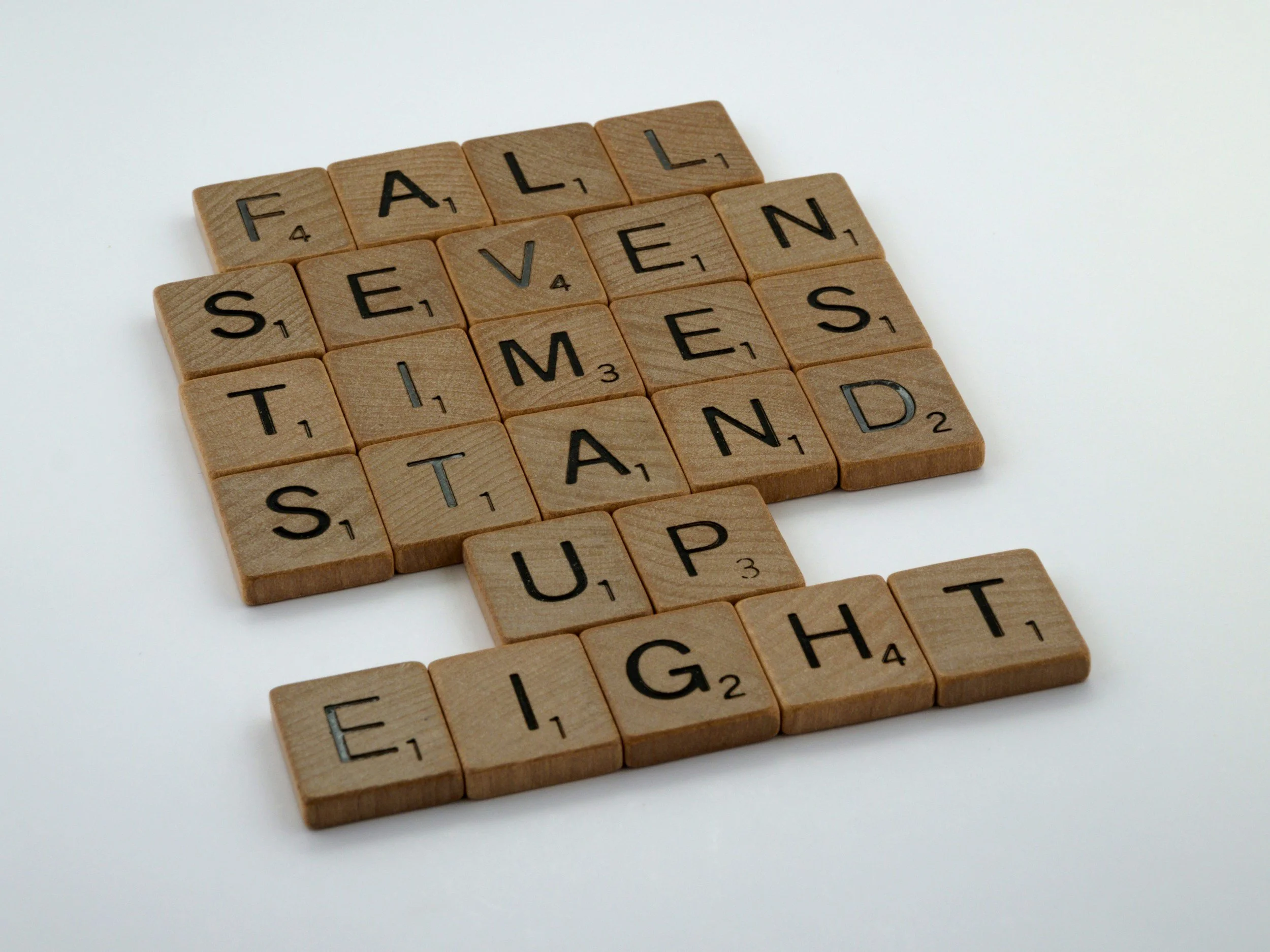
“Successful repetitions build competence. Failed repetitions build resilience.”
If we take James at his word, how many of us are actually cultivating failure? I might lose a few of you there—failure isn't exactly fun—but stay with me. To build resilience, we have to navigate the ambiguity of having multiple, often conflicting, emotions about a single topic.
The Complexity of Connection
Dr. Kanojia is a psychiatrist who is incredibly passionate about helping people find a life that actually fits them. He dropped a truth bomb in the podcast: The emotion of love can sometimes be the very thing that destroys a relationship.
How? Because simply "loving" someone isn't a wide enough emotional range to sustain a resilient marriage or friendship. Relationships require a spectrum of emotions—frustration, joy, grief, curiosity—each signaling something vital about you, your partner, and your environment. Resilience isn't about staying in one "good" emotion; it’s about having the tools and skills to navigate the whole map.
The Biological Blueprint of Bouncing Back
Of course, my favorite part of the discussion was Alok's support for the idea that we must get our physiology right to understand our emotions correctly. We can talk about neuroplasticity and mindfulness all day, but if the "hardware" is glitching, the "software" won't run.
I’ve lived this. In 2014, a motor vehicle accident ended my physical practice of Aikido. It stripped away my identity as an athlete. I went from being unable to walk a quarter-mile to eventually deadlifting 120 lbs. It took 12 years of persistence. Throughout that decade, I had to hold two conflicting truths: I am broken, and I will not break myself. I had to try, hurt myself, fail, and try again.
Interestingly, the most predictive measures of this kind of resilience are things we can actually track:
Heart Rate Variability (HRV): This is having slight, unpredictable variations between heartbeats. It’s a sign of a nervous system that is responsive and "loose," not rigid.
Vagal Tone: This is your "parasympathetic brake"—your ability to slow your heart rate down after a stressor.
Cortisol Awakening Response (CAR): A healthy system shows high cortisol 30–45 minutes after waking (to get you moving!) and low cortisol at bedtime.
I work with my patients on these every day, sometimes through direct measurement and sometimes through the ancient wisdom of Chinese Medicine and acupuncture to restore that vital flow and variation.
The Take-Home
So, what am I doing with all this?
I’m going to celebrate my mistakes. I’ll notice when I fail, acknowledge that it hurts, remind myself that I am not a failure, and then—I’m going to try again.
I’m leaning into the "Stretch Zone." I am consciously leaving my competence zone, because that is where the skills for a complex world are built even if it just the smallest of steps.
I’m tending my inner three-year-old, which is my body. I’ll support my physiology through nutrient-dense food, quality sleep, movement, and taking a moment to simply watch my breath.
Variation is health. Ambiguity is growth.
What is your take-home? Are you willing to trade a little competence for a lot of resilience today?