Diet choices as climate action & the effects of soil health on human health
In the April 2026 Learning Collective, Natasha led a conversation about the profound, often overlooked connections between the healthy soil, how food is produced, and the biological resilience of our brains. Here is a video between Natasha and Kristen summarizing the discussion.
The “Antidepressant” Bacteria
Connections between Exposure to Mycobacterium vaccae - found in healthy soil and compost - positively affects mental health primarily by stimulating the immune system, which in turn activates neurons in the brain to increase the production of serotonin (a key neurotransmitter for regulating mood). Research shows that exposure – through smelling or touching soil or compost containing M. vaccae – leads to:
Reduced anxiety and fear-related behaviors.
Improved resilience to stress, preventing PTSD-like symptoms.
Enhanced cognitive function and learning.
Antidepressant-like effects, similar to the benefits of medication or exercise.
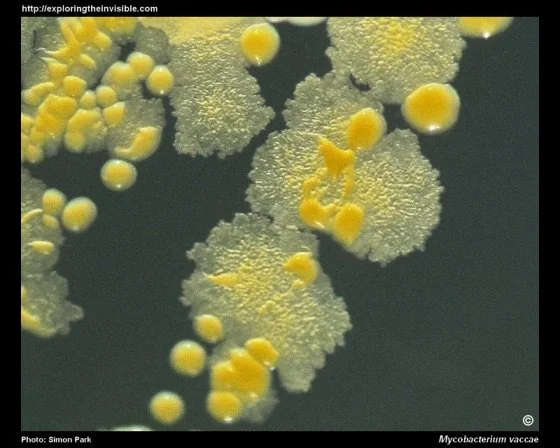
Image of M. vaccae
The nuance of diet as climate action
The idea that being vegetarian or vegan is a climate action is prevalent, but often overlooks the importance of taking care of our bodies and also how our food is produced. Diet choices alone are often an incomplete climate strategy, especially when done in a way that minimizes the importance of physiological health (not getting enough protein), disregards how the plant-based foods we consume might be grown, and overlooks the role of well-managed livestock in climate solutions.
The climate impact of diets depends heavily on:
the production system
geography
scale
management practices
In other words, when it comes to climate action, how food is produced—through soil management, land use, and inputs—is as important as, if not more important than, whether it is plant- or animal-based.
The connection between soil health and nutrient density
Soil health - the capacity of soil to function as a living ecosystem - shapes both nutrient density (how much of a nutrient is in food) and nutrient availability (how effectively those nutrients can be absorbed). This relationship operates through the soil’s physical structure, chemical composition, and biological activity.
Healthy soil biology supports active nutrient cycling, producing food that goes beyond calories to include a broader spectrum of phytonutrients and minerals associated with human health and cognitive function. While outcomes vary by crop type, genetics, and management practices, plants can only take up what is present and accessible in the soil.
Inputs and intensive management can drive growth, but they cannot substitute for missing nutrients. If key minerals and biological processes are absent or impaired, those limitations are reflected in the food produced.
What about hydroponics?
The root systems of plants grown in healthy soil interact with a living soil food web. The nutrients they have access to is dynamic and biologically mediated. In hydroponics, conditions are highly controlled and nutrients are delivered in precise, soluble forms.
While macronutrients and vitamins are often comparable across growing systems, differences typically emerge in micronutrients, mineral content, and phytonutrients. Healthy soil systems tend to produce more nutritionally complex food when compared with hydroponics, whereas crops grown in degraded soils often underperform in overall nutritional quality.
There are both benefits and limitations of vertical farming with hydroponics. Hydroponics can produce large volumes of food on relatively small footprints and - when distributed to local markets - the carbon footprint from reduced transportation distances is notable. However, the produce may fall short on the micro- and phytonutrients our bodies evolved to crave.
Key takeaways
Find ways to spend time in natural settings. Whether you’re working in a garden or walking in the woods and breathing deeply, these environments can support and reinforce health and well-being.
If you enjoy gardening but are limited by space or sunlight, there are many resources available for container gardening and finding shade-tolerant plants. Consider growing herbs and vegetables alongside your ornamentals. Even a simple pot of parsley, kale, or cherry tomatoes can be rewarding—there’s a distinct satisfaction in eating food you’ve grown yourself.
Concerned about cost? Many herbs and vegetables can be grown affordably from seed or propagated from cuttings.
Whether it’s a backyard garden, a few containers, or herbs on a windowsill, participating in food production deepens awareness of and appreciation for what it takes to grow healthy food.
Concerned about the climate? One of the most practical places to act is through the food you support. Take time to understand where your food comes from and how it’s produced. Seek out local farms and producers, and prioritize food grown in locally. This shortens supply chains, reduces transportation impacts, and keeps nutrients and dollars circulating within your community. Look for farmers who prioritize soil health, responsible land management, and minimal reliance on synthetic inputs. Ask questions at farmers markets, join a CSA, or visit a farm—these connections build relationships, transparency and trust while strengthening local resilience.
Live in a food desert? There are a growing number of mail-order resources that prioritize regenerative or soil-health-oriented growing practices. Below are a few to consider. This is not an endorsement of any of these companies - just a effort to provide a starting place for you to do your own research.
EatWild maintains a directory of farms that produce grass-fed or pastured meat and dairy products as well as some great tips for getting the most from your veggies and fruits, even when shopping from your grocery store.