When Improv, Trauma, and Neuroscience Collide: A Real-Life Lesson in Regulation
Join me on July 30 for a practical training that brings together Internal Family Systems (IFS), the Polyvagal Ladder, nutrition, and ethics in a way that can transform both clinical work and everyday life.
I'm excited to be presenting an upcoming training through Cascadia Training on Thursday, July 30, from 10:00 a.m. to 5:00 p.m. Pacific Time. During this workshop, we'll explore:
How to use the Internal Family Systems (IFS) model alongside the Polyvagal Ladder
The powerful role food plays in nervous system regulation
Ethical considerations when discussing nutrition, the body, and well-being with clients
How to chart for insurance when you discuss nutrition, the body, and well-being with clients
One aspect I'm especially excited about is that Eric Strom, a lawyer and mental health professional, will be joining us to discuss ethics and scope of practice. His presentation will help clinicians understand how to have meaningful conversations about food and health while staying within professional boundaries.
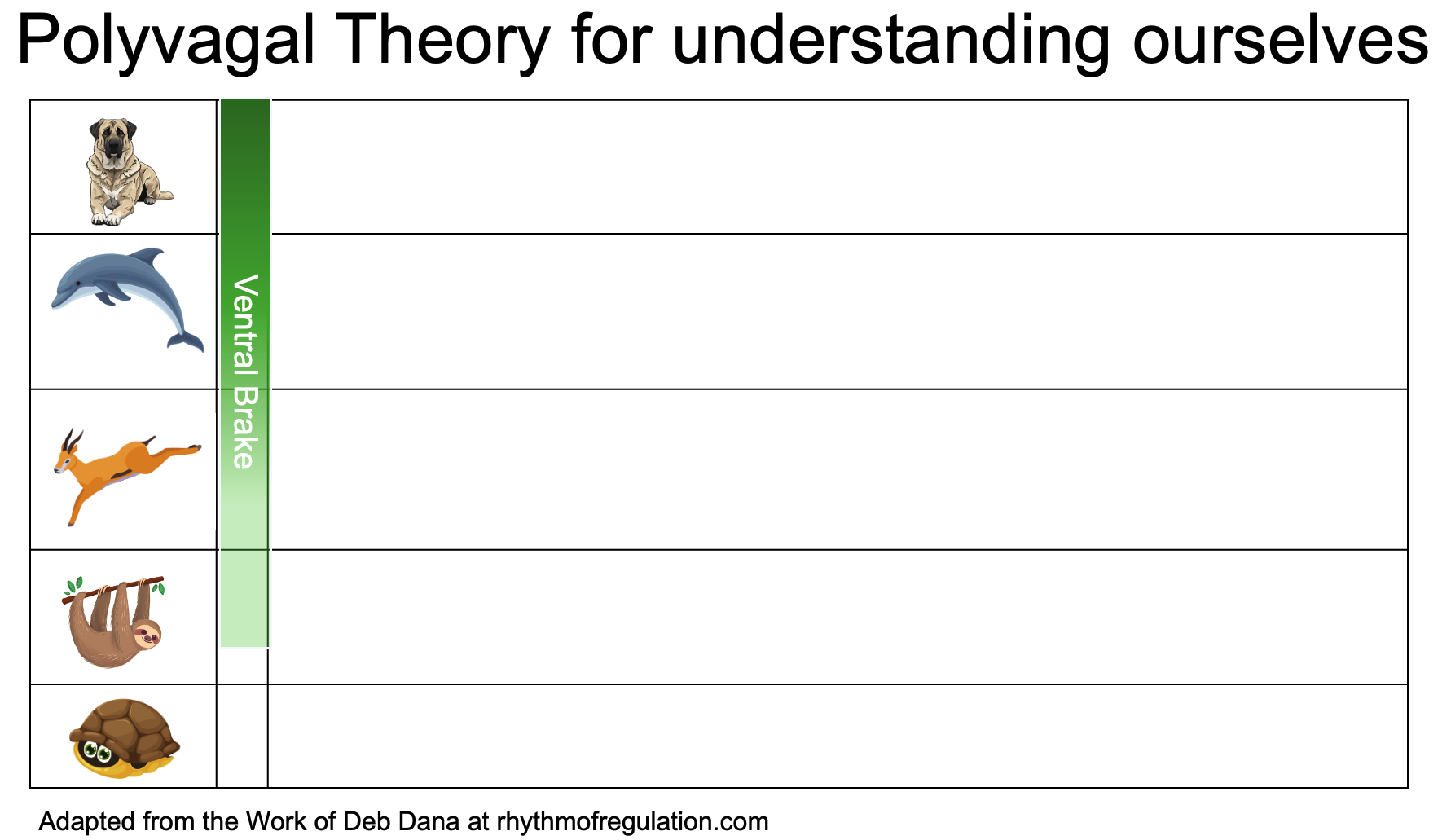
Rather than giving you a theoretical overview, I thought I'd share a recent personal experience that perfectly illustrates how these concepts work together in real life. If you are a verbal learner, here is a video with a picture of the polyvagal ladder and IFS to illustrate me navigating my triggered nervous system.
An Unexpected Nervous System Lesson
I do a lot of public speaking, but recently I decided to try something completely different: an improv class.
I was curious. Could I handle spontaneous comedy and performance the same way I handle speaking engagements?
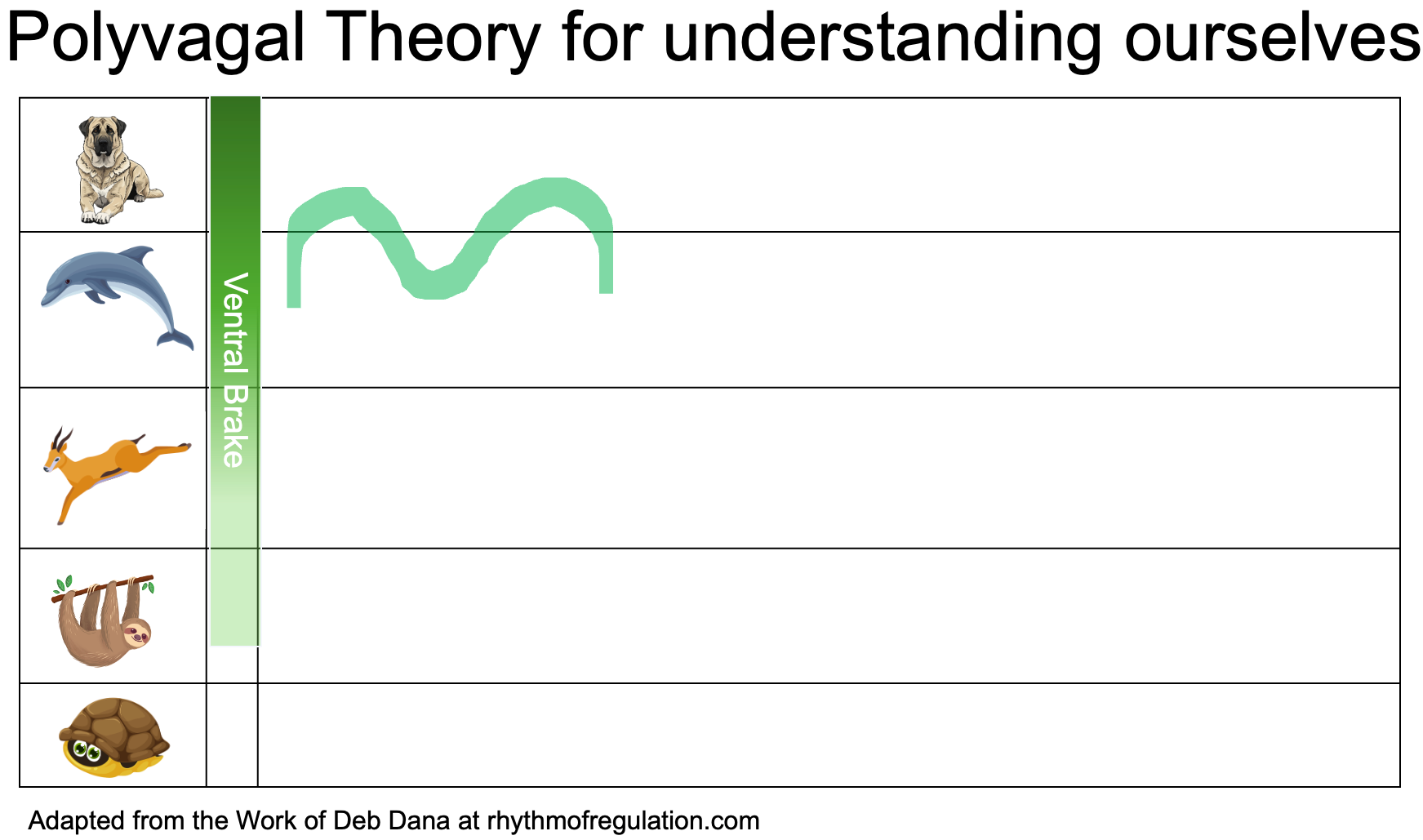
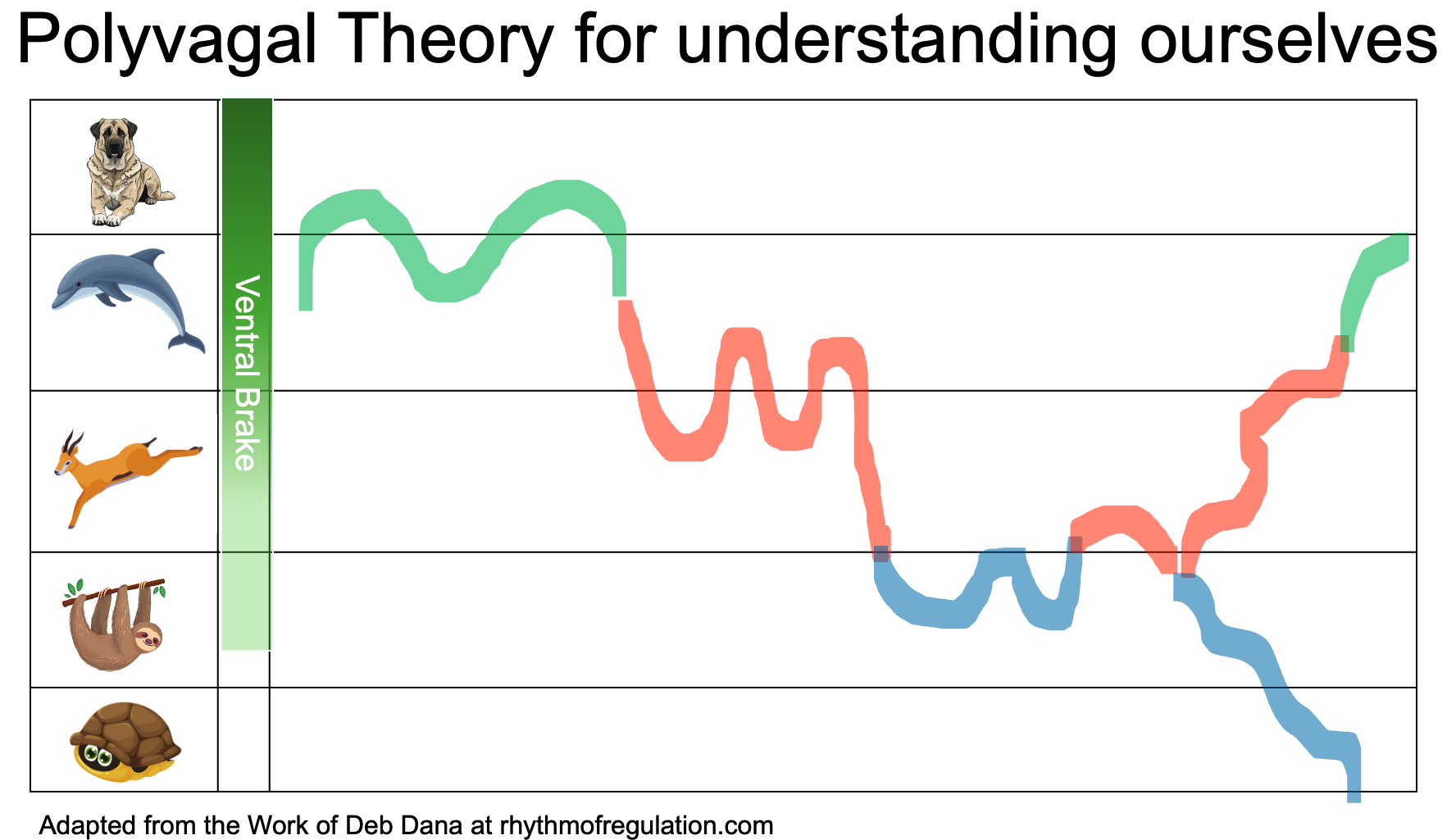
Walking into the class, I felt energized and excited. On the Polyvagal Ladder, I was mostly in a mobilized but regulated state—alert, engaged, and looking forward to the challenge [Polyvegal Ladder Stage: Dolphin (Ventral Vagal with some engaged Sympathic)]
We started with a few exercises, and I noticed myself moving between excitement and mild anxiety. That's normal. Learning something new often creates a healthy level of activation.
Then came a paired exercise.
My partner appeared visibly annoyed. To this day, I don't actually know what was bothering him. But my nervous system—and especially some of my inner kids—interpreted his expression as, "He's upset with me."
Instantly, old trauma responses lit up.
When Old Wounds Get Activated
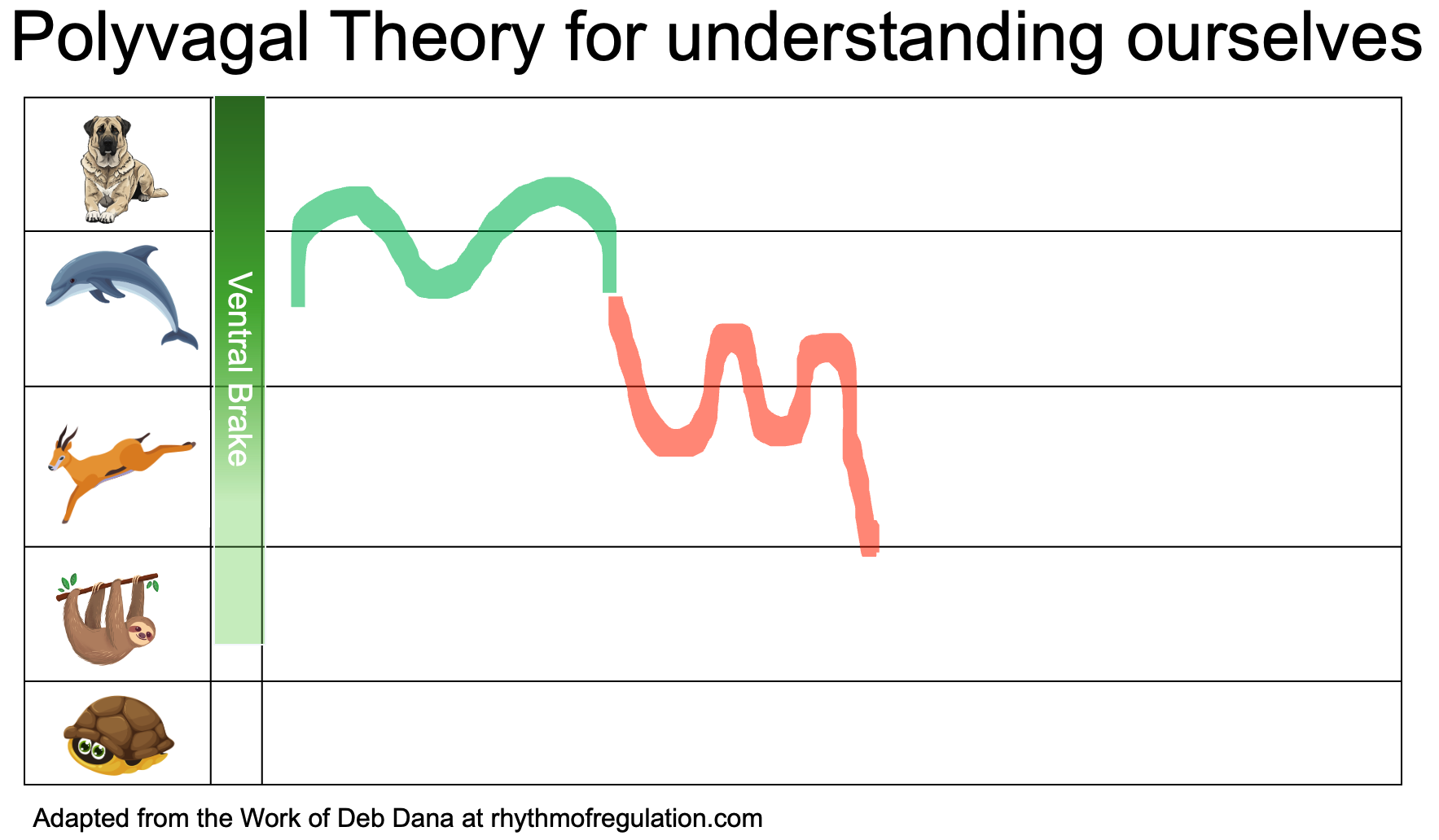
As soon as I perceived disapproval, I experienced a dramatic shift in state.
I moved toward what is called a "dorsal" response—a shutting-down state. Since a panic attack- in Deer Stage -is uncomfortable and socially not acceptable in this context, I then automatically moved to what I describe as "slothing out." I became quiet, withdrawn, and disconnected. [Polyvagal Ladder Stage: Sloth (Dorsal Vagal with some Sympathetic)]
Instead of noticing the many people in the room having fun, I became hyper-focused on those who looked uncomfortable or anxious.
My nervous system had shifted from engagement and connection to threat detection and isolation.
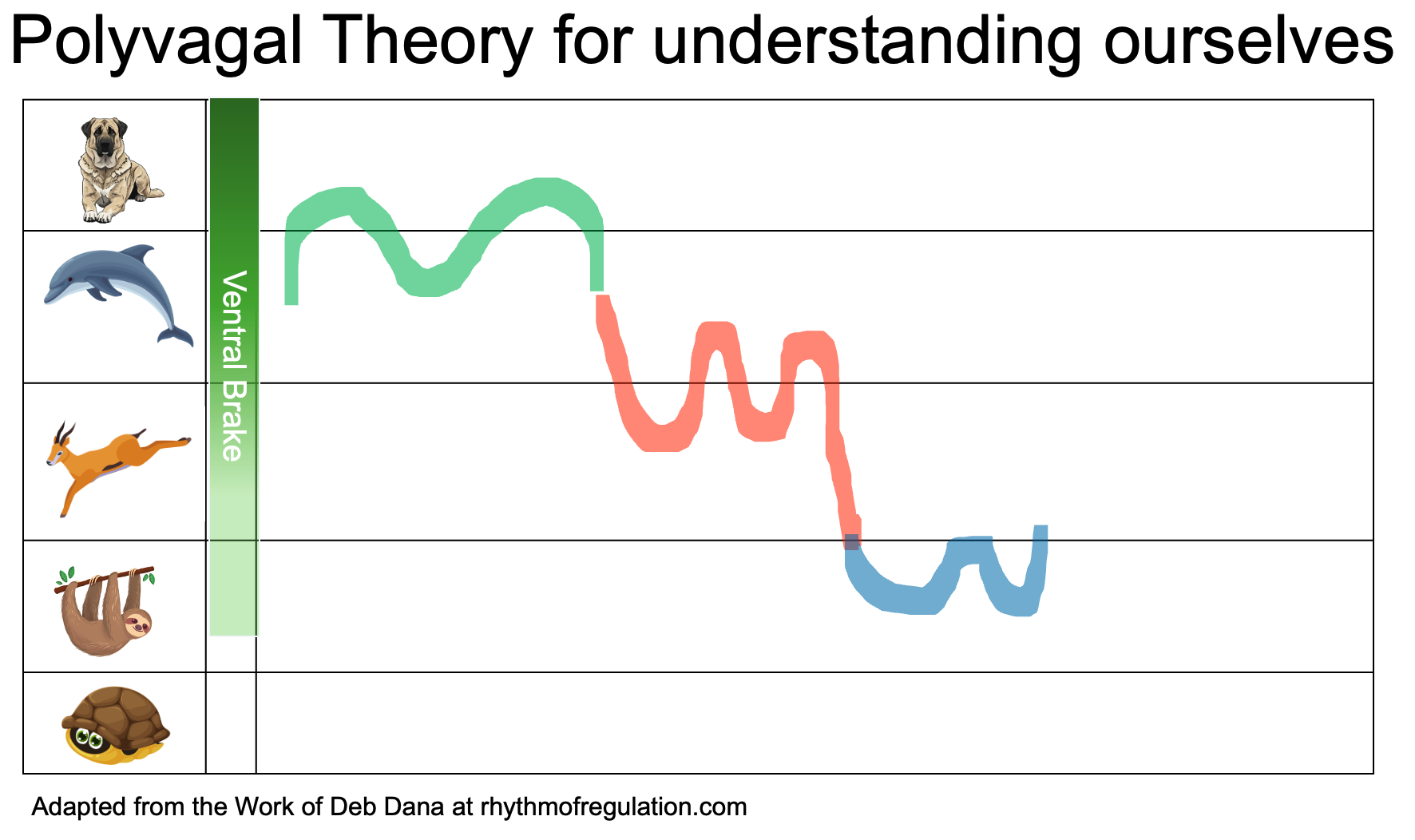
By the end of class, I was fluctuating between feeling numb and feeling as though I might have a panic attack. [Polyvagal Ladder Stage: Deer/Sloth (Dorsal Vagal with Ventral Vagal with LOTS Sympathetic)]
I made it through the class, but I knew exactly what my nervous system wanted to do next—I wanted to disappear and numb out.
The Temptation to Turtle Up
When I got home, I grabbed some food. A lizard brain treat with nuts, dried fruit, and a square of chocolate. But after eating, what I really wanted to do was what I call "turtling up." This is where I wanted to shut down my agitation and anxiety. Numb is a way of doing that. [Polyvagal Ladder Stage: Sloth or Turtle (Dorsal Vagal with very little Sympathetic)]
For me, that looks like doom-scrolling.
It was only four o'clock in the afternoon, but I knew the pattern. If I started scrolling, I would likely continue until ten o'clock at night, sleep poorly, and wake up feeling exhausted and emotionally hungover.
For someone else, turtling up might look like:
Binge eating
Drinking alcohol
Using marijuana
Excessive television watching
Any behavior designed to avoid, numb, or escape discomfort
My nervous system was saying, "That was scary. Let's hide."
But I didn't want to spend the rest of the evening trapped in that state.
For many people, turtling up begins a cycle of self-harm that is hard to get out of because of the shame that the maladaptive behaviors create.
Choosing Regulation Instead
So I asked myself a different question:
How can I help my nervous system move back toward regulation?
My answer was something I jokingly call "doom calling."
I started calling friends until I found someone available to talk and take a walk with me while we chatted on the phone.
And here's where all the neuroscience comes together.
During that walk, I was:
Connecting with another person (supporting Ventral Vagal engagement)
Moving my body (working with mobilization rather than against it)
Using bilateral stimulation through walking
Spending time outdoors which lower cortisol
Engaging my senses noticing colors, birds and temperature changes
Bringing myself back into the present moment
For an hour, I talked, processed what had happened, laughed, and connected.
By the time I got home, everything had shifted.
The urge to doom-scroll was gone.
Instead, I spent the evening being productive, creative, and engaged. I slept well and woke up feeling refreshed.
Why This Matters
This is exactly the kind of practical application we'll explore during the training.
Understanding the Polyvagal Ladder, Internal Family Systems, and the role of nutrition isn't just useful in a therapy office. These frameworks help us understand our own responses and give us concrete tools for navigating difficult moments.
When we recognize our state, understand what triggered it, and know how to support our nervous system, we can make choices that move us toward connection rather than avoidance.
Join Us
Whether you're a mental health professional or simply someone interested in understanding yourself better, this training is designed to be practical, accessible, and immediately applicable.
Mental health professionals can earn continuing education credits, but you do not need to be a clinician to attend.
Participants consistently tell me that what they learn improves both their professional practice and their personal lives.
I'd love for you to join us.
For more resources and updates, visit KristenAllott.com and sign up for the newsletter to receive a free chapter of Fuel Your Brain, Not Your Anxiety.
I hope to see you there!